Scoliosis & Spine
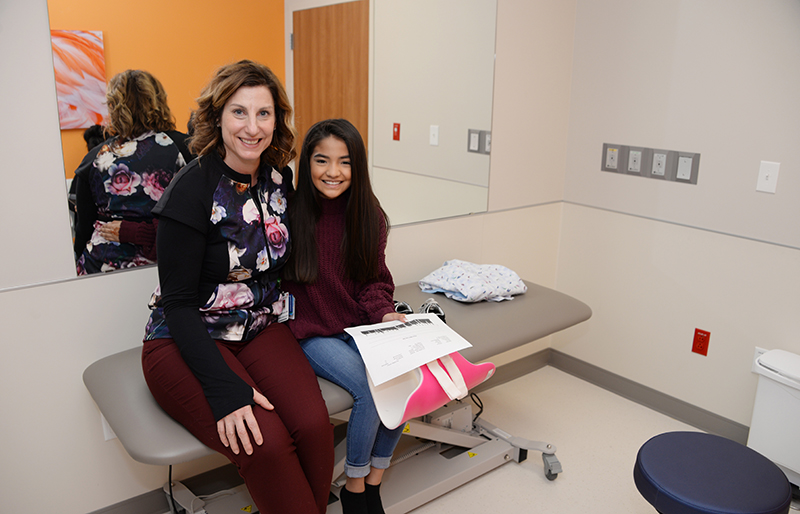
What Is Scoliosis?
Scoliosis is not a disease, rather a progressive condition causing the spine to curve or twist into a “C” or “S” shape. Scoliosis symptoms include uneven shoulders, shoulder blade prominence and waistline discrepancies. Scoliosis reportedly affects two to three percent of school-aged children and has a tendency to run in families.
TYPES OF SCOLIOSIS
Adolescent idiopathic scoliosis (AIS) – the most common form of scoliosis that occurs in children ages 10 to 18. Idiopathic means that all other causes of scoliosis have been ruled out and the patient’s curve typically goes to the right and can include either the thoracic or lumbar spine or both.
Congenital scoliosis – scoliosis that is present at birth and is due the intra-uterine formation of abnormally shaped/formed vertebrae
Additionally, scoliosis can be categorized by the following:
Congenital scoliosis – scoliosis that is present at birth and is due the intra-uterine formation of abnormally shaped/formed vertebrae
Early-onset scoliosis – scoliosis that occurs before the age of 9
Additionally, scoliosis can be categorized by the following:
- Thoracic scoliosis – curve in the middle, or thoracic, part of the spine
- Lumbar scoliosis – curve in the lower, or lumbar, part of the spine
- Thoracolumbar scoliosis – curve in both the spine’s lower thoracic and upper lumbar parts
SCOLIOSIS CAUSES
In congenital scoliosis, the cause is known. A child may be born with a misshapen vertebra, one of the building blocks of the spine. A curve may also develop from an underlying neurological disorder (neuromuscular scoliosis). Most often, however, the cause is unknown, or idiopathic. Slouching, bad posture, sleeping position, lack of calcium or carrying heavy books, backpacks or purses does not cause scoliosis. It’s not the result of doing anything “wrong,” and there’s no way to prevent it.
Research has proven that scoliosis has a genetic component and tends to run in families. Children with a family history of scoliosis are more at risk, especially those ages 10 to 15. Girls tend to be diagnosed with scoliosis more than boys, and the condition is not limited to a specific ethnicity or race. Groundbreaking research at Scottish Rite for Children is working to determine the cause of scoliosis, better understand factors that lead to curve progression, explore ways to prevent curve progression and improve treatments.
Research has proven that scoliosis has a genetic component and tends to run in families. Children with a family history of scoliosis are more at risk, especially those ages 10 to 15. Girls tend to be diagnosed with scoliosis more than boys, and the condition is not limited to a specific ethnicity or race. Groundbreaking research at Scottish Rite for Children is working to determine the cause of scoliosis, better understand factors that lead to curve progression, explore ways to prevent curve progression and improve treatments.
SCOLIOSIS DIAGNOSIS
Finding and diagnosing scoliosis is easy when examining the back closely, but it can be missed if you’re not looking for it. Sometimes clothes don’t hang properly. For example, one pant leg may be longer, or a skirt hem doesn’t look level. A shoulder blade may look higher and be seen through clothes or when wearing a swimsuit.
Parents or friends might notice the curve, but most curves are found through a scoliosis test and screening in schools or by a pediatrician. A very common test for scoliosis that most people are familiar with is the Adams forward bend test. Patients bend forward at the waist, and the examiner looks for signs of rotational deformities. This trained examiner can detect even a slight curve when a child bends over to touch his or her toes and can provide the correct medical advice.
Parents or friends might notice the curve, but most curves are found through a scoliosis test and screening in schools or by a pediatrician. A very common test for scoliosis that most people are familiar with is the Adams forward bend test. Patients bend forward at the waist, and the examiner looks for signs of rotational deformities. This trained examiner can detect even a slight curve when a child bends over to touch his or her toes and can provide the correct medical advice.
SCOLIOSIS TREATMENT
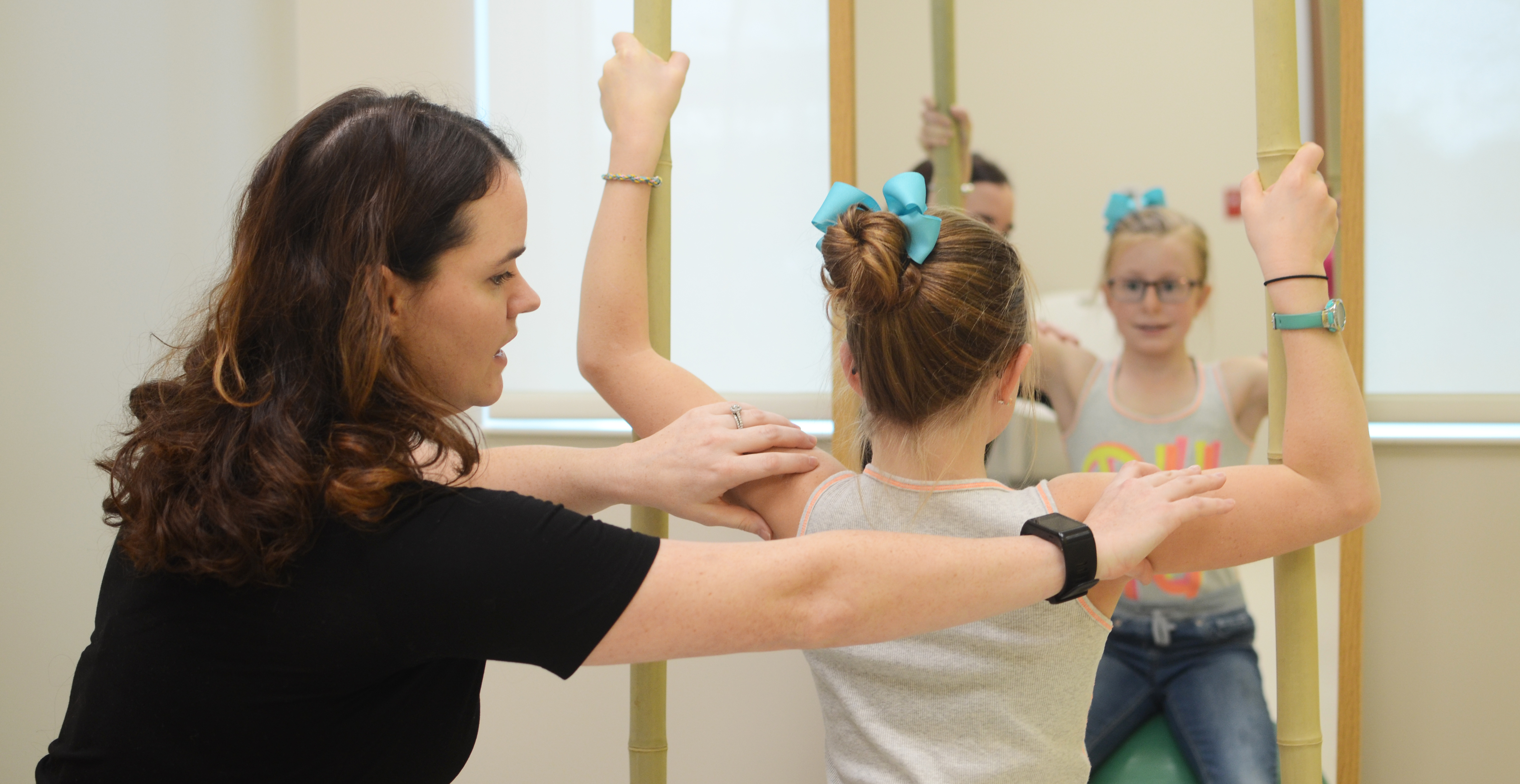
The goal of scoliosis treatment is to keep the spinal curve(s) as small as possible and prevent progression. We provide a multidisciplinary, patient-centered approach to scoliosis treatment. Our spine and scoliosis specialists analyze spinal maturity; the degree, extent and location of the curve; and the potential for progression. This information is used to determine the best treatment option, which can include bracing, casting, physical therapy or surgery. Regardless of the treatment plan, we ensure that every child receives the highest quality care.
7575SCOLIOSIS PATIENTS TREATED LAST YEAR
10359OUTPATIENT CLINIC VISITS LAST YEAR
Experts
FAQs
What are the different types of scoliosis?
- Adolescent idiopathic scoliosis (AIS) – the most common form of scoliosis that occurs in children ages 10 to 18
- Congenital scoliosis – scoliosis that is present at birth and is due the intra-uterine formation of abnormally shaped/formed vertebrae
- Early-onset scoliosis – scoliosis that occurs before the age of 9
- Neuromuscular scoliosis – secondary scoliosis that develops because of an underlying medical condition that adversely affects the brain, nerves, or muscles
- Syndromic Scoliosis: An underlying genetic syndrome that causes the scoliosis
Additionally, scoliosis can be categorized by the following:
- Thoracic scoliosis – curve in the middle, or thoracic, part of the spine
- Lumbar scoliosis – curve in the lower, or lumbar, part of the spine
- Thoracolumbar scoliosis – curve in both the spine’s lower thoracic and upper lumbar parts
Is scoliosis genetic? Why do kids get scoliosis?
There are many types of scoliosis, and kids can develop it at any age. The most common form has a genetic component. Our doctors and researchers have recently linked the condition to three different genes.
Other types of scoliosis are far less common and can be caused by an abnormal shape of one of the vertebra (congenital scoliosis) or associated with an underlying neuromuscular condition (neuromuscular scoliosis).
Scoliosis is not the result of any behavior. And there’s no known vitamin, mineral or nutritional deficiency that leads to spinal deformity.
Other types of scoliosis are far less common and can be caused by an abnormal shape of one of the vertebra (congenital scoliosis) or associated with an underlying neuromuscular condition (neuromuscular scoliosis).
Scoliosis is not the result of any behavior. And there’s no known vitamin, mineral or nutritional deficiency that leads to spinal deformity.
What are the signs and symptoms of scoliosis?
Scoliosis is a curvature of the spine into a “C” or “S” shape. A parent, school nurse or friend may notice a small difference in the shape of your back. You might notice that clothes begin to fit differently or that one hip is higher than the other. When you look in a mirror, you may see that one shoulder is raised or that you lean to one side. A doctor can confirm the condition with an X-ray.
Is scoliosis painful?
Scoliosis does not usually hurt, and healthy teenagers shouldn’t have curve-related pain. If you do feel scoliosis pain, it’s a good idea to schedule an appointment with your specialist for evaluation.
When do I need to see a scoliosis specialist?
If your curve measures more than 10 degrees. Slight curves in the spine may not need any treatment other than periodic monitoring by your doctor.
What do I need to become a patient?
If your nurse detects a spinal curve, the best thing to do is to see a pediatrician or general practice doctor, who can examine the curve and determine if it’s scoliosis. If your doctor confirms scoliosis, they can refer you to Scottish Rite for Children for further evaluation. To schedule an appointment or for additional information, please contact Patient Connect at 214-559-8670. An X-ray is not necessary for a doctor’s referral.
Will I have to wear a back brace? Will it hurt?
Scoliosis braces are usually prescribed for curves above 20 degrees in patients whose spines are still growing. Wearing a back brace is the only effective nonsurgical way to prevent the curve from getting larger.
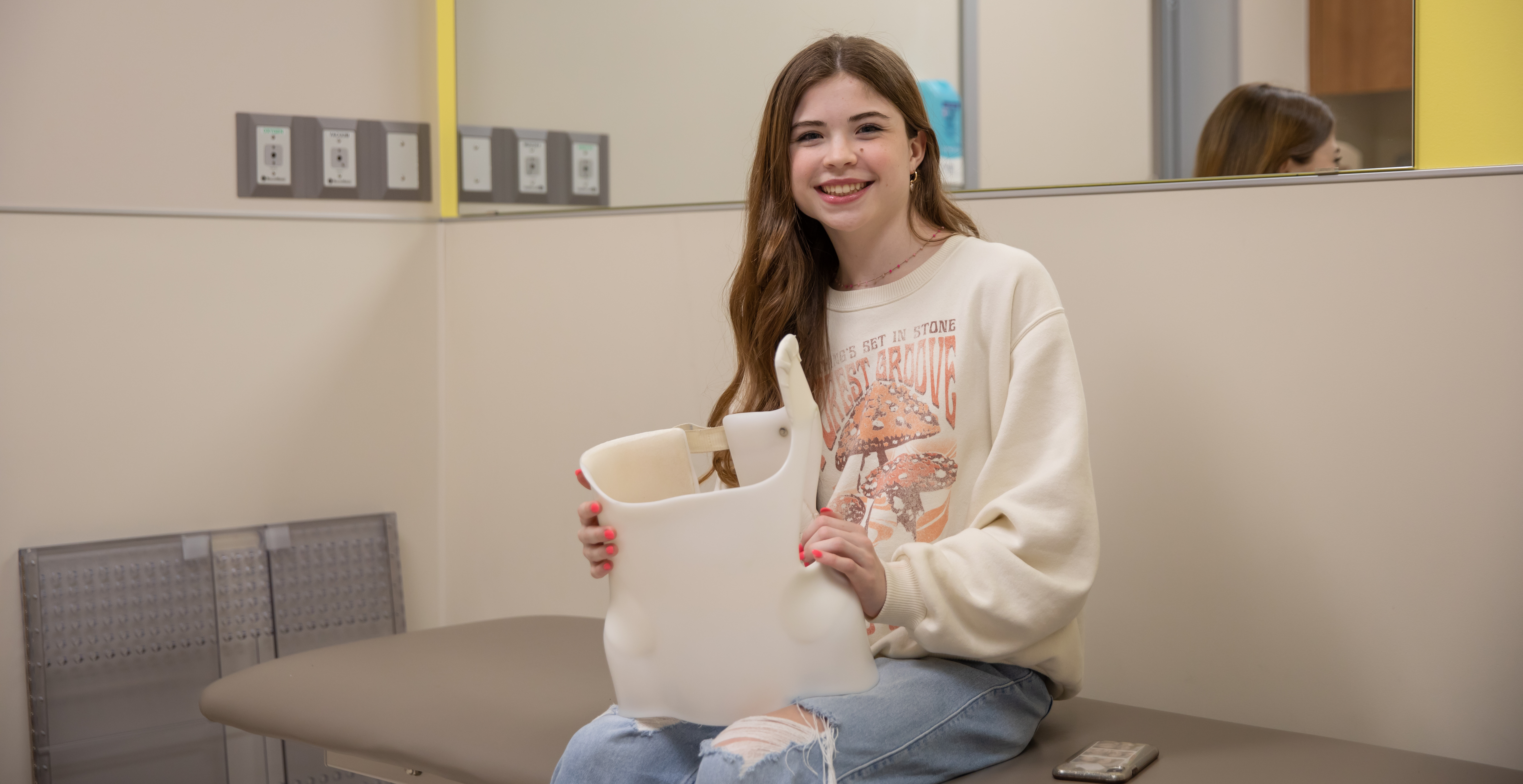
Your brace will be custom-made for your back’s shape. It shouldn’t hurt, but there will be some pressure applied to the side of the chest to partially correct the curve. You may feel some discomfort at first, but it should decrease over time. If your brace hurts while you’re wearing it, contact your orthotist to see if it needs an adjustment.
Bracing is the most common type of treatment for scoliosis at Scottish Rite. There are many factors our team evaluates to determine the use of a scoliosis brace such as the severity of the scoliosis and whether the child is still growing. Bracing is a treatment that can be used to help stop the curve from progressing. Every brace is custom made by our Orthotics department. For more information visit our Bracing for Scoliosis page.
You can participate in almost every activity you currently enjoy while wearing the brace. Apart from wearing it to school and while at home, you might be able to take off your brace while competing in certain sports or activities. The more you wear it, the more effective it will be at aligning your spine. Read more about our bracing study that was featured in The New York Times.
Your brace will be custom-made for your back’s shape. It shouldn’t hurt, but there will be some pressure applied to the side of the chest to partially correct the curve. You may feel some discomfort at first, but it should decrease over time. If your brace hurts while you’re wearing it, contact your orthotist to see if it needs an adjustment.
Bracing is the most common type of treatment for scoliosis at Scottish Rite. There are many factors our team evaluates to determine the use of a scoliosis brace such as the severity of the scoliosis and whether the child is still growing. Bracing is a treatment that can be used to help stop the curve from progressing. Every brace is custom made by our Orthotics department. For more information visit our Bracing for Scoliosis page.
You can participate in almost every activity you currently enjoy while wearing the brace. Apart from wearing it to school and while at home, you might be able to take off your brace while competing in certain sports or activities. The more you wear it, the more effective it will be at aligning your spine. Read more about our bracing study that was featured in The New York Times.
What are the goals of scoliosis surgery?
The primary goal of scoliosis surgery is to stop the curve from getting worse. The secondary goal is to correct deformity. Through surgery, the physician safely corrects the curve while maintaining balance of the spine. An average amount of correction is usually 50 to 80 percent of the curve.
Will I get a scar from surgery? How big will it be?
Scoliosis surgery is usually done from the back, leaving a scar on the middle of the back. If the spine surgery is done through the side, the scar is on the side. The length of the scar depends on the number of small incisions and curves that need to be corrected. Every patient’s situation is different, but the scar usually heals as a thin white line within a year of surgery.
What activities can I do after surgery?
Children can typically return to school approximately three weeks after the surgery, but lifting heavy objects, such as backpacks, is discouraged for several months.
For the first month, limit activity to walks and light chores. Depending on your type of surgery and other factors, your doctor may recommend participation in light sports as early as three months after surgery, and back to full activity at six months. In general, you should avoid heavy lifting, bending or twisting for approximately six to nine months.
For the first month, limit activity to walks and light chores. Depending on your type of surgery and other factors, your doctor may recommend participation in light sports as early as three months after surgery, and back to full activity at six months. In general, you should avoid heavy lifting, bending or twisting for approximately six to nine months.
RESEARCH
The specialists in our Center for Excellence in Spine have spent a lifetime treating, researching and pioneering care for scoliosis, so kids around the world can stand a little taller. Our Sarah M. and Charles E. Seay/Martha and Pat Beard Center for Excellence in Spine Research was established in 2005 to determine the cause of scoliosis, better understand factors that lead to curve progression, explore ways to prevent curve progression and improve treatments. This revolutionary center provides a forum for experts from diverse disciplines to collaborate on specific challenges related to spinal deformities.
In April 2007, our researchers identified the first gene – CHD7 – associated with idiopathic scoliosis. In 2011, they identified two additional genes – CHL1 and DSCAM – that give new insight into the condition. These gene discoveries lay the groundwork for future research and may lead to improved scoliosis prevention and treatment methods.
Many of our scoliosis patients participate in one or more of our various research studies. Our Pediatric Scoliosis Database currently contains information collected over the past 15+ years on more than 1,500 individuals with idiopathic scoliosis (with hundreds more and their family members participating in our Genetic Scoliosis Database). Information such as age, weight, family history, age of onset, scoliosis progression over time and clinical measurements can easily be compared and linked to clinical, radiographic and laboratory data. The database will ultimately integrate information for several hundred research participants with idiopathic scoliosis in the next three to four years. Learn more.
In April 2007, our researchers identified the first gene – CHD7 – associated with idiopathic scoliosis. In 2011, they identified two additional genes – CHL1 and DSCAM – that give new insight into the condition. These gene discoveries lay the groundwork for future research and may lead to improved scoliosis prevention and treatment methods.
Many of our scoliosis patients participate in one or more of our various research studies. Our Pediatric Scoliosis Database currently contains information collected over the past 15+ years on more than 1,500 individuals with idiopathic scoliosis (with hundreds more and their family members participating in our Genetic Scoliosis Database). Information such as age, weight, family history, age of onset, scoliosis progression over time and clinical measurements can easily be compared and linked to clinical, radiographic and laboratory data. The database will ultimately integrate information for several hundred research participants with idiopathic scoliosis in the next three to four years. Learn more.
INNOVATION
The specialists in our Center for Excellence in Spine develop leading-edge technologies to improve scoliosis treatment around the globe.
The Scottish Rite for Children Spinal System has been widely used for the treatment of spinal deformities for nearly two decades. The experts in the center have enhanced the system to improve the surgical treatment of this complex condition by using and innovating various surgical technologies. Learn more.
The Scottish Rite for Children Spinal System has been widely used for the treatment of spinal deformities for nearly two decades. The experts in the center have enhanced the system to improve the surgical treatment of this complex condition by using and innovating various surgical technologies. Learn more.