Clubfoot & Foot Disorders
.jpeg?width=800&height=532&ext=.jpeg)
WHAT IS CLUBFOOT?
Clubfoot is a congenital disorder in which the foot is severely turned inward and pointed downward. It is one of the most common pediatric musculoskeletal conditions requiring referral to a pediatric orthopedic surgeon. Half of all patients affected have involvement of both feet. If left untreated, the foot deformity can make shoe wear problematic, and walking can become painful over time.
CAUSE
The cause of clubfoot remains uncertain, but many researchers believe the condition is genetic, as it often runs in families. Clubfoot is more common in males than females and affects about one in every 1,000 births. Each year, this amounts to 4,000-8,000 affected infants in the United States and 130,000-260,000 affected children worldwide.
DIAGNOSIS
Clubfoot is most often diagnosed at birth, but can also be diagnosed before birth by prenatal ultrasound. Typically, the heel tilts in and down, and the forefoot turns in. The affected foot and calf are usually smaller than those of the unaffected leg.
TREATMENT
Treatment of clubfoot ideally begins at an early age. A prenatal ultrasound can detect clubfoot, some as early as 13 weeks but usually around the 20th week of pregnancy. At the time of diagnosis, a prenatal appointment is recommended with a pediatric orthopedic specialist at Scottish Rite for Children. After the baby is born, call Scottish Rite to schedule an evaluation.
Newborns and infants at Scottish Rite are treated nonsurgically in two ways: the Ponseti casting technique and the French functional physical therapy method of stretching, massaging and taping. In the rare event that these methods do not correct the foot, the patient may undergo surgery. In most cases, a special brace is used to prevent the condition from recurring.
Newborns and infants at Scottish Rite are treated nonsurgically in two ways: the Ponseti casting technique and the French functional physical therapy method of stretching, massaging and taping. In the rare event that these methods do not correct the foot, the patient may undergo surgery. In most cases, a special brace is used to prevent the condition from recurring.
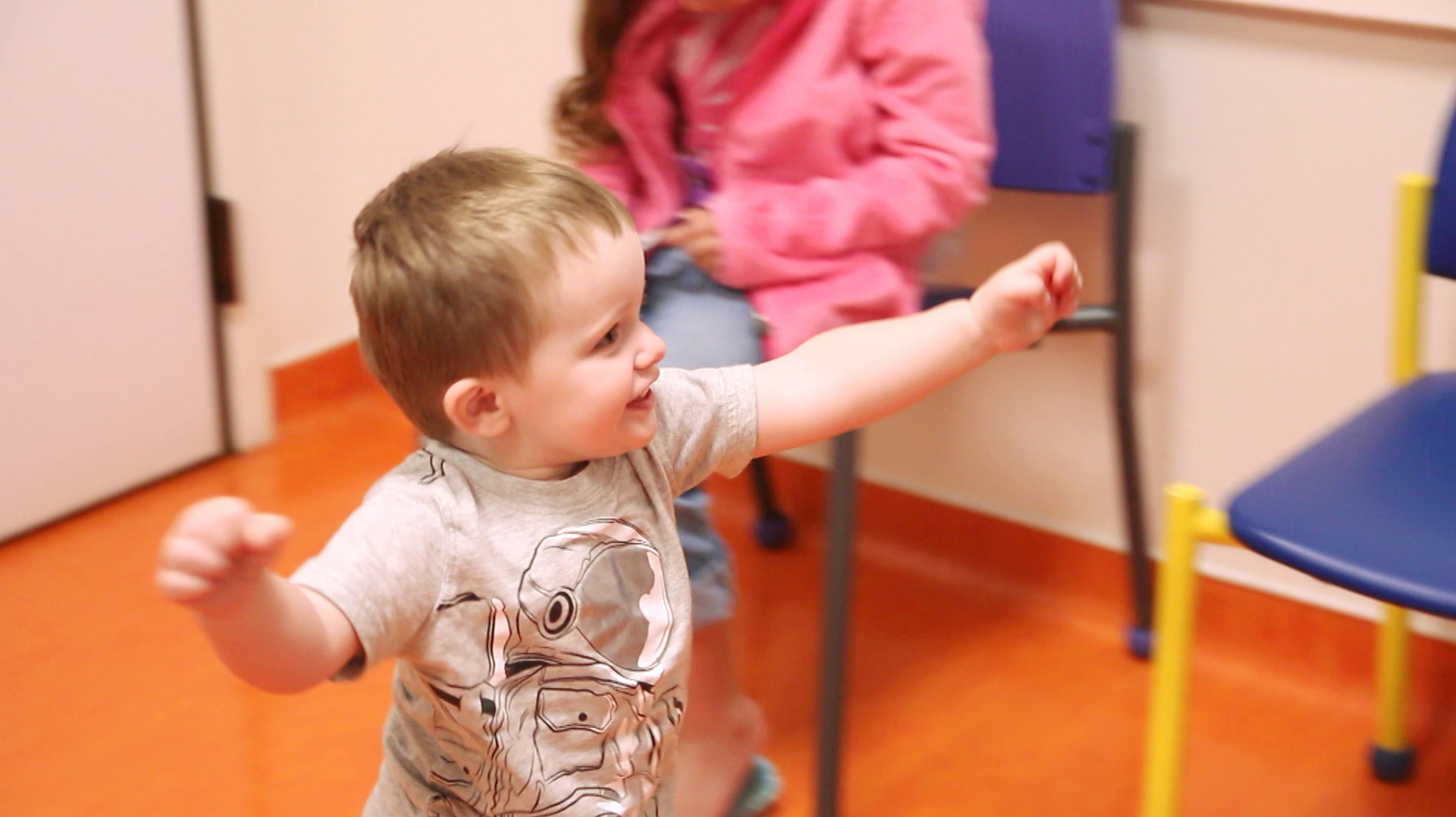
1116PATIENTS TREATED LAST YEAR
2618OUTPATIENT CLINIC VISITS LAST YEAR
1IN 1000 CHILDREN AFFECTED
Experts









FAQs
What caused my child’s clubfoot?
The cause of clubfoot is unknown. While it can coexist with other conditions, most babies with clubfoot are otherwise healthy. Clubfoot affects about one baby in every 1,000 live births. Fifty percent of babies with clubfoot are affected in both feet, and males are affected slightly more often than females.
Does clubfoot run in families?
Heredity does seem to play a role in the occurrence of clubfoot, but the exact cause is still unknown.
Will treatment make my child’s clubfoot normal?
Doctors at Scottish Rite for Children treat clubfoot with Ponseti casting. Our goal is to help the child’s foot rest flat on the ground and be flexible and pain-free. Because the tissues below the knee are affected, the clubfoot may always be a little shorter in length than the other foot, and the calf may always be slightly thinner than the other calf. Bracing and splinting are important in preventing your child’s foot from reverting to the curved position.
Will casting or bracing delay my child’s development?
Babies with clubfoot should develop normally. Casting, bracing and splinting should not interfere with your child’s development and must be continued per doctor’s orders to prevent recurrence of the clubfoot.
Will my child be able to play like other children?
Clubfoot, once treated, should not limit your child from participating in many athletic activities.
What if nonoperative treatment doesn’t correct my child’s clubfoot?
Ninety-five percent of clubfoot conditions treated with the Ponseti casting achieve good initial correction. Recurrence may require repeat casting, repeat heel cord release or alternative bracing. If the clubfoot still cannot be maintained in a corrected position, surgery may be required.
How long will my child have to wear a brace?
Bracing and splinting is a vital part of both the Ponseti casting and French functional physical therapy methods of treatment. In the Ponseti casting method, the brace is comprised of two shoes held together by a bar. After the final cast is removed, the brace is used full-time for three months, except for skin checks and bathing, and then for 12 hours at night and during naps until at least four years of age.
TREATMENT OPTIONS
Ponseti Casting Method
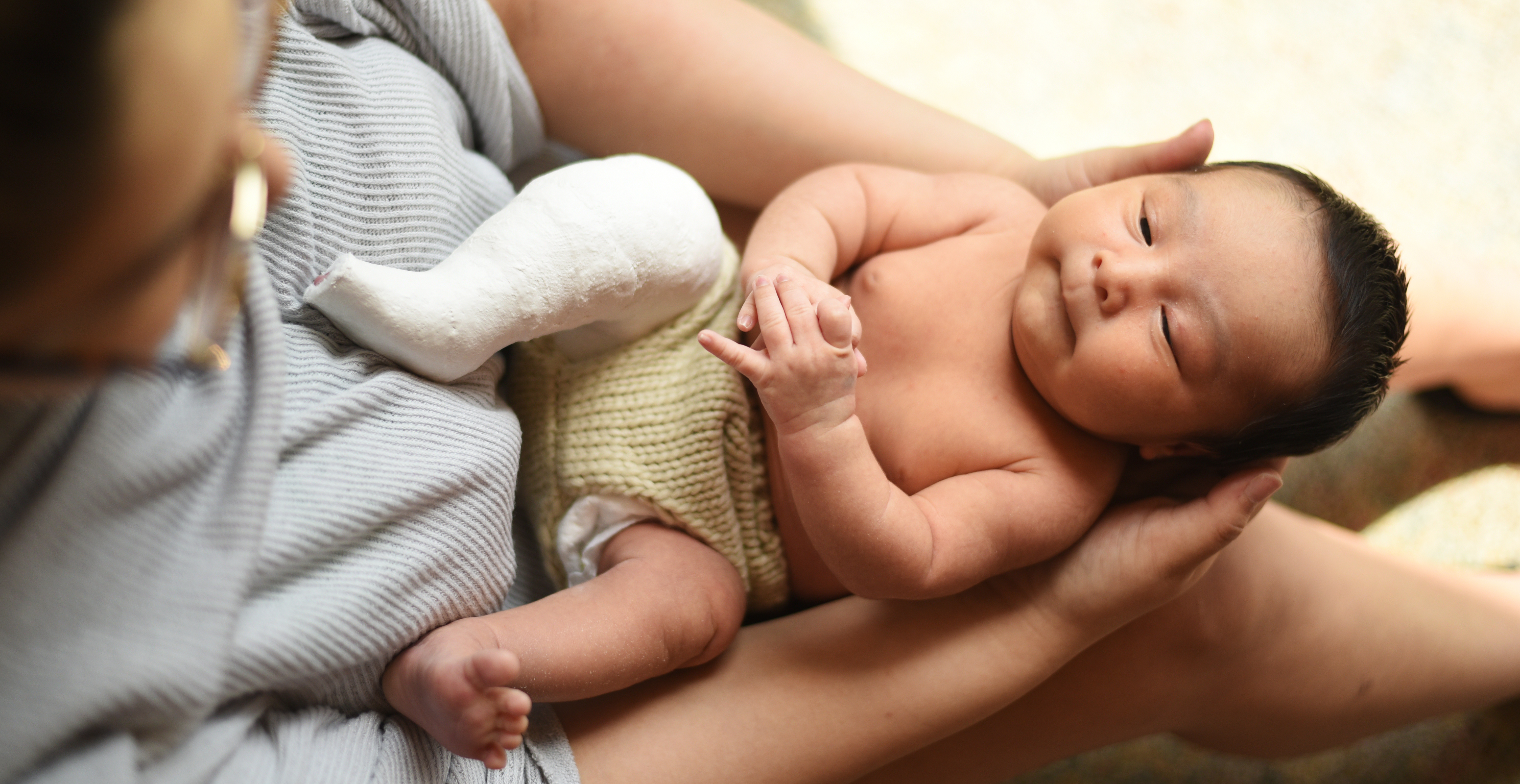
The Ponseti casting method involves placing a cast that extends from the thigh to the toes after gentle stretching of the foot. The plaster cast is replaced every week, during which time the foot is stretched further and continued gradual improvement is achieved.
For a newborn with congenital clubfoot, major improvement is obtained in four to five weeks. All components of the condition are usually corrected at this point, except for the tightness in the heel cord (equinus).
Once all other components of the clubfoot are corrected by casting, the equinus is corrected by cutting the heel cord to bring the ankle into a normal position. This quick procedure is done in the clinic and does not require any anesthesia. Cream is applied to numb the skin, and the doctor performs a heel cord release with an extremely small tool. The cut in the skin is about the size of a pinprick, so no stitching is required.
A final cast is then worn for three weeks to allow the tendon to heal. The child then wears shoes attached to a bar, which maintains the foot in the corrected position. This brace is worn full-time for three months and then used at night until the child is two years old.
French Functional (Physical Therapy) Method
The French functional (physical therapy) method consists of daily stretching, mobilization (exercise and massage) and taping to slowly move the foot to the correct position.
A trained physical therapist directs care of children whose parents elect to pursue the French method. Visits with our therapists initially average three sessions each week (30-60 minutes per session) for mobilization and stretching of the foot, taping it to maintain correction and fitting it with a molded plastic splint.
Our therapists teach parents how to conduct the mobilization, stretching and taping at home. Because most clubfoot improvement occurs within the first three months, clinic visits become less frequent after this point. Daily stretching, taping and splinting of the child’s foot is continued by the parents at home until the child reaches two years of age.
Surgical Correction of Clubfoot
Not all clubfoot disorders can be corrected by nonsurgical methods. In addition, some clubfoot disorders that are initially corrected with casting or the French method may recur due to the child’s inability to tolerate braces or the parents’ inability to comply with the bracing requirements. When this occurs, surgical correction of the feet may be needed.
At times, only partial recurrence of the clubfoot happens. In this instance, limited surgery is needed. In such cases, the heel cord and joint capsule in the back of the ankle may need to be released (limited posterior release), or a tendon that helps to move the foot may need to be repositioned (tibialis anterior tendon transfer).
More extensive surgery on the foot will be needed in a few patients with clubfoot disorders to achieve a satisfactory, lasting position of the foot. This more extensive surgery is known as a posteromedial release. Infants are usually older than nine months of age before this procedure is performed.
The Ponseti casting method involves placing a cast that extends from the thigh to the toes after gentle stretching of the foot. The plaster cast is replaced every week, during which time the foot is stretched further and continued gradual improvement is achieved.
For a newborn with congenital clubfoot, major improvement is obtained in four to five weeks. All components of the condition are usually corrected at this point, except for the tightness in the heel cord (equinus).
Once all other components of the clubfoot are corrected by casting, the equinus is corrected by cutting the heel cord to bring the ankle into a normal position. This quick procedure is done in the clinic and does not require any anesthesia. Cream is applied to numb the skin, and the doctor performs a heel cord release with an extremely small tool. The cut in the skin is about the size of a pinprick, so no stitching is required.
A final cast is then worn for three weeks to allow the tendon to heal. The child then wears shoes attached to a bar, which maintains the foot in the corrected position. This brace is worn full-time for three months and then used at night until the child is two years old.
French Functional (Physical Therapy) Method
The French functional (physical therapy) method consists of daily stretching, mobilization (exercise and massage) and taping to slowly move the foot to the correct position.
A trained physical therapist directs care of children whose parents elect to pursue the French method. Visits with our therapists initially average three sessions each week (30-60 minutes per session) for mobilization and stretching of the foot, taping it to maintain correction and fitting it with a molded plastic splint.
Our therapists teach parents how to conduct the mobilization, stretching and taping at home. Because most clubfoot improvement occurs within the first three months, clinic visits become less frequent after this point. Daily stretching, taping and splinting of the child’s foot is continued by the parents at home until the child reaches two years of age.
Surgical Correction of Clubfoot
Not all clubfoot disorders can be corrected by nonsurgical methods. In addition, some clubfoot disorders that are initially corrected with casting or the French method may recur due to the child’s inability to tolerate braces or the parents’ inability to comply with the bracing requirements. When this occurs, surgical correction of the feet may be needed.
At times, only partial recurrence of the clubfoot happens. In this instance, limited surgery is needed. In such cases, the heel cord and joint capsule in the back of the ankle may need to be released (limited posterior release), or a tendon that helps to move the foot may need to be repositioned (tibialis anterior tendon transfer).
More extensive surgery on the foot will be needed in a few patients with clubfoot disorders to achieve a satisfactory, lasting position of the foot. This more extensive surgery is known as a posteromedial release. Infants are usually older than nine months of age before this procedure is performed.
OTHER FOOT DISORDERS
In addition to clubfoot, the surgeons at Scottish Rite for Children have extensive experience treating numerous other foot and ankle disorders. Management of these conditions varies and is tailored to the patient based upon the severity or deformity and associated problems such as pain, problems with shoe wear or gait abnormalities. Treatments range from observation to physical therapy to surgery, if necessary. Such conditions include:
- Congenital vertical talus
- Extra toes
- Flat feet (pes planus)
- High arched feet (pes cavus)
- Metatarsus adductus
- Toe deformities
- Tarsal coalitions